The People You Didn't Pick Are Probably Your Best Creative Partners

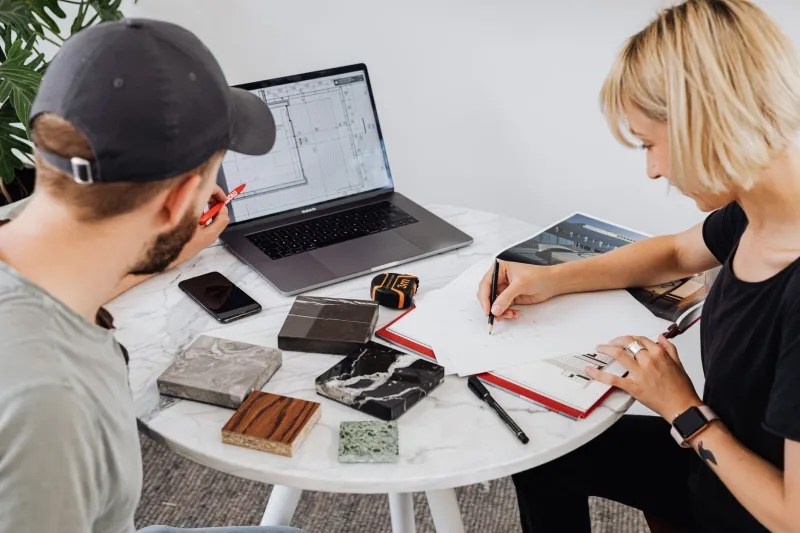
There's a version of collaboration that feels really good. You find someone who speaks your language, laughs at the same references, has roughly the same aesthetic sensibility. The process flows. Nobody has to explain themselves too hard. You finish each other's sentences in a Google Doc and the whole thing feels like a creative vacation.
And sometimes, that work is genuinely excellent.
But here's the thing nobody really talks about: some of the best creative output in history came from people who did not choose each other. Forced pairings. Mismatched personalities. Collaborators who annoyed each other, challenged each other, or flat-out didn't understand each other — at least not at first.
The question isn't whether comfortable collaboration is real. It is. The question is whether comfort is actually what moves your work forward.
The Comfort Trap in Creative Partnerships
When you get to hand-select your collaborators, you're naturally going to gravitate toward people who already agree with you on the big stuff. Same influences. Similar processes. Comparable definitions of what "good" looks like. That's not a character flaw — it's just how humans operate. We seek familiarity because familiarity feels safe.
But safe creative environments have a ceiling.
When everyone in the room already sees the world the same way, the work tends to confirm what you all already believe rather than discover something new. You're not really in dialogue — you're in an echo chamber with better lighting and a shared Spotify playlist.
The friction you're trying to eliminate? That's often where the actual ideas live.
What Forced Collaboration Actually Does to Your Brain
Think about a time you were thrown into a creative project with someone you wouldn't have chosen. Maybe it was a work assignment, a school project, a commission that came with a specific partner attached. Maybe you dreaded it. Maybe you spent the first meeting trying to figure out how to diplomatically redirect everything they suggested.
And then something weird happened.
They pushed back on something you thought was obvious. Or they brought a reference you'd never encountered. Or their instinct about the structure was completely different from yours — and when you actually tried it their way, it worked better than your version.
That moment of creative dissonance is underrated. It forces you to articulate why you believe what you believe, not just act on instinct. It makes you defend choices you've never had to defend before. It exposes the assumptions baked into your process that you didn't even know were there.
You grow differently when you're challenged than when you're supported. Both matter. But most people dramatically over-index on support.
The Outside Perspective Problem
Here's something that comes up a lot in creative work: the people closest to your process are often the least useful critics of your output. They know too much. They've watched the sausage get made. Their feedback is filtered through weeks or months of context that a fresh audience doesn't have.
Someone outside your usual circle doesn't carry that baggage. They respond to what's actually in front of them, not what they know you were trying to do.
When you collaborate with someone who isn't already embedded in your creative world, you get a version of that outside perspective baked into the process itself. They're not going to let something slide because they know what you meant. They're going to tell you when something isn't landing — because for them, it genuinely isn't.
That's uncomfortable. It's also incredibly useful.
The Compatibility vs. Growth Tension
Creative compatibility and creative growth are not the same thing, and treating them like they are is one of the more common mistakes people make when building a collaborative practice.
Compatibility makes the process easier. Growth makes the work better. And while those two things can coexist, they often pull in different directions.
A partner who challenges your instincts, who has a fundamentally different relationship to risk or structure or aesthetics, is going to make the collaboration feel harder. There will be more negotiation, more disagreement, more moments where you want to just override them and move on. That friction has a real cost — in time, in energy, in emotional bandwidth.
But it also tends to produce work that neither of you would have made alone. Work that has tension in it, because tension was present in the room. Work that has range, because both of you brought something genuinely different to the table.
The question isn't whether friction is comfortable. It isn't. The question is whether the output is worth it — and more often than not, it is.
How to Actually Work With Someone You Didn't Choose
If you find yourself in a forced or unexpected collaboration, a few things tend to help:
Lead with curiosity, not defense. When someone pushes back on your instinct, your first job is to understand their reasoning before you counter it. Sometimes you'll still disagree. But sometimes their pushback will reveal something you missed.
Separate the person from the idea. This sounds obvious and is genuinely hard in practice. When you're already skeptical of someone's fit as a collaborator, it's easy to dismiss their ideas before you've actually evaluated them. Try to give each idea its own fair hearing, independent of who's pitching it.
Name the tension explicitly. When you and a collaborator are genuinely stuck on a creative disagreement, saying it out loud — "we're seeing this differently and I want to figure out why" — often moves things faster than trying to subtly maneuver around it.
Let the work be the arbiter. When you can, prototype both directions. Test them. Let the actual output tell you which instinct was right, rather than trying to resolve it through pure argument.
The People Who Pushed You Furthest
If you look back at your creative history honestly, I'd bet the collaborators who pushed your work the furthest weren't always the ones you'd have chosen first. There was probably someone in there who drove you a little crazy, who had a completely different process, who made you justify choices you'd always just made on autopilot.
And the work that came out of it was probably stronger for all of that.
The people you carefully curate into your creative circle are valuable. Don't underestimate them. But don't build a creative life so controlled and comfortable that there's no room for the unexpected partnership, the mismatched pairing, the collaboration you would have said no to if you'd had the choice.
Sometimes the best creative partner is the one you didn't pick.