Nobody Bookmarks a Portfolio Anymore: The Case for Curating Work Like a Playlist
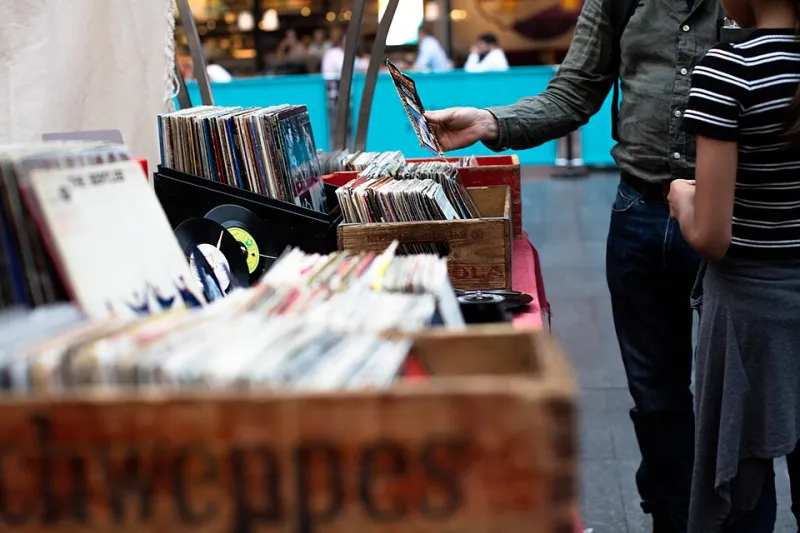
Photo: Artificial Photography artificialphotography, CC0, via Wikimedia Commons
I visited six portfolio websites last month trying to hire a designer. I remember one of them. Not because it was the best work—because it was the only one that felt like it had a pulse. It wasn't a grid of thumbnails with a headshot and a "Let's work together!" button. It was a running, curated list of what this person was making right now, with a note on why each piece existed and what they'd do differently next time. It read like a mixtape. Everything else read like a résumé filed in triplicate.
That's when it clicked for me: the portfolio is dead, and the playlist killed it.
What a Portfolio Gets Wrong
The traditional portfolio is a museum. Curated once, updated rarely, frozen in time. Its whole message is "here is what I have done," spoken in the past tense, to an audience that mostly isn't listening. The problems are structural:
- It's static in a world that rewards recency
- It shows outcomes but hides thinking
- It's built for a single visit—there's no reason to come back
- It flattens a person into their twelve best pieces, which is a lie of omission
Worse, the effort-to-attention ratio is brutal. People spend weeks polishing portfolio sites that get a fraction of the traffic of a single good social post. We keep building them because that's what you do, the way people kept printing business cards long after nobody asked for one.
What a Playlist Does Differently
A playlist is the opposite object. It's ongoing. It has a now, not just a then. Think about how playlists work in music: they're ordered, they evolve, songs rotate in and out, and the sequence itself communicates taste. You don't just hear the songs—you hear the person behind the choices.
Applied to creative work, a playlist might look like:
- A continuously updated collection of projects, each with a short note on why it exists
- Work that's allowed to expire—old pieces retire so the current thinking stays visible
- A visible arc: where you were, what you're circling now, where you're headed
- Annotations, drafts, and dead ends included, because the process is the signal
I'm seeing this all over the US creative scene—designers running public logs, developers treating their repos as living narratives, writers publishing serially instead of hoarding clips. The format rewards people who are in motion, and quietly punishes people who've been resting on three great projects from 2021.
A Simple Framework for Building Yours
If you want to make the switch, here's the structure I'd use:
1. Pick one shelf, not five. A playlist has a theme. "Selected work 2019–2025" is a museum. "Things I'm making about small-town identity in America" is a playlist. Narrow until it feels opinionated.
2. Write one sentence per piece—about why, not what. Anyone can see what the work is. The sentence that makes people care is why it exists and what you learned. This is where the story lives.
3. Build an expiration date into everything. Every piece gets a sunset. When new work enters, old work leaves. This single rule forces curation and keeps the collection honest about who you are now.
4. Add a "what's next" slot. One line about what you're currently circling. It turns visitors into watchers. People come back for what's coming, not for what's finished.
5. Update on a rhythm, not on a whim. Monthly is plenty. The rhythm matters more than the volume—consistency is what separates a playlist from a junk drawer.
The Uncomfortable Part
The playlist approach demands something portfolios let you avoid: it reveals your trajectory. There's nowhere to hide when your current work sits next to your last three years of it. Some people will look worse in that format. The ones who keep making things, though—the ones actually in motion—will look alive, and that's the thing no static grid can fake.
The museum model assumed people would come to you and study quietly. Nobody does that anymore. They scroll, they sample, they subscribe or they don't. Meet them there. Make your work something worth following, not just visiting.