Why Working With Someone Who Disagrees With Everything You Do Is the Secret to Your Best Work
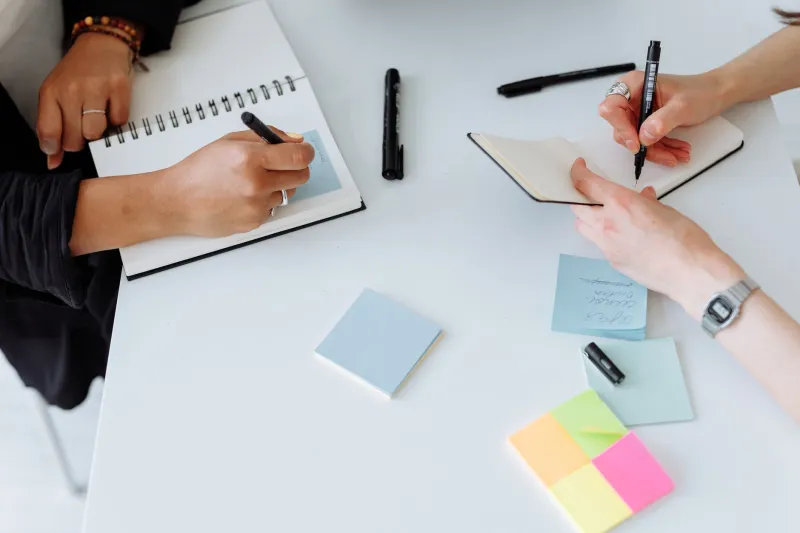
There's a version of creative collaboration that looks great on paper. You find someone whose taste mirrors yours, whose references line up, who laughs at the same things and cringes at the same things. You vibe. The work flows easily. Nobody's feelings get hurt.
And the output is... fine. Competent. Maybe even polished. But rarely surprising.
Here's the uncomfortable thing I've had to sit with: the projects that genuinely pushed me forward weren't the ones where everything clicked. They were the ones where almost nothing did — at least not at first.
The Comfort Trap Nobody Warns You About
We're wired to seek out people who confirm our worldview. Psychologists call it homophily — the tendency to gravitate toward similarity. It's not a character flaw. It's just how humans are built. We feel safer around people who think like us, process like us, value what we value.
In creative work, that instinct shows up as the endless search for a "creative soulmate." Someone who just gets it. And honestly, that search makes sense when you've spent years feeling misunderstood or having your ideas dismissed by people who didn't speak your language.
But here's what that search costs you: it removes the resistance that forces ideas to get stronger.
When everyone in the room agrees with you, your ideas never get stress-tested. They don't have to survive contact with a genuinely different perspective. They stay soft. Comfortable. Unexamined. You end up producing work that resonates deeply with people who already think exactly like you — which is a much smaller room than you think.
What Ideological Friction Actually Does to a Creative Project
I started paying attention to this a few years back when I collaborated with someone whose entire approach to storytelling was almost the opposite of mine. I lead with emotion and then build structure around it. He led with architecture — almost clinical in the way he mapped things out before a single word hit the page.
The first few sessions were genuinely irritating. We kept talking past each other. His feedback felt cold to me. My instincts probably felt sloppy to him.
But something weird started happening around week three. My emotional instincts started finding containers they'd never had before. His structural frameworks started carrying weight they'd never carried before. Neither of us produced what we would have made alone — and what we made together was better than either of our solo work.
That's not a feel-good coincidence. That's what happens when two genuinely different minds have to negotiate toward something neither of them fully envisioned.
The friction wasn't a bug. It was the engine.
You Have to Actually Defend Your Vision to Know What It Is
Here's a thing that doesn't get said enough: a lot of us don't fully understand our own creative vision until someone challenges it.
When you're surrounded by people who agree with you, you never have to articulate why you believe what you believe about your work. You never have to separate the parts of your approach that are genuinely intentional from the parts that are just habit or default or fear dressed up as aesthetic preference.
Working with someone who pushes back — respectfully but persistently — forces that excavation. You have to go deeper into your own reasoning. And sometimes you realize mid-defense that you can't actually justify a choice you've been making for years. That's not a failure. That's information you needed.
The best collaborators I've had weren't the ones who made me feel understood. They were the ones who made me feel challenged — who made me work to explain myself, and in doing so, helped me figure out what I actually stood for.
The Difference Between Productive Friction and Just a Bad Fit
Okay, I want to be real here because there's a version of this idea that tips into toxic positivity — the "all conflict is growth" trap. Not every difficult collaboration is secretly valuable. Some people are just wrong for your project. Some dynamics are draining in ways that don't produce anything useful.
The distinction I've landed on is this: productive friction comes from a difference in approach or worldview, not a difference in commitment or respect.
If your collaborator has a completely different aesthetic philosophy but is genuinely invested in making something excellent, that tension is generative. If your collaborator is checked out, dismissive, or operating in bad faith, no amount of philosophical difference is going to produce a breakthrough. You're just going to be exhausted.
So the filter isn't "do we agree?" It's "do we both care enough to fight for something good?"
How to Actually Find These People (Without Making It Weird)
The instinct, once you accept this idea, is to go out and deliberately seek conflict. That's not quite right either. You don't want someone who disagrees for the sake of it — a contrarian who's performing opposition rather than genuinely processing from a different place.
What you're looking for is someone whose life experience has shaped a fundamentally different relationship to the work. Different cultural background. Different professional training. Different creative medium. Different relationship to risk or failure or audience.
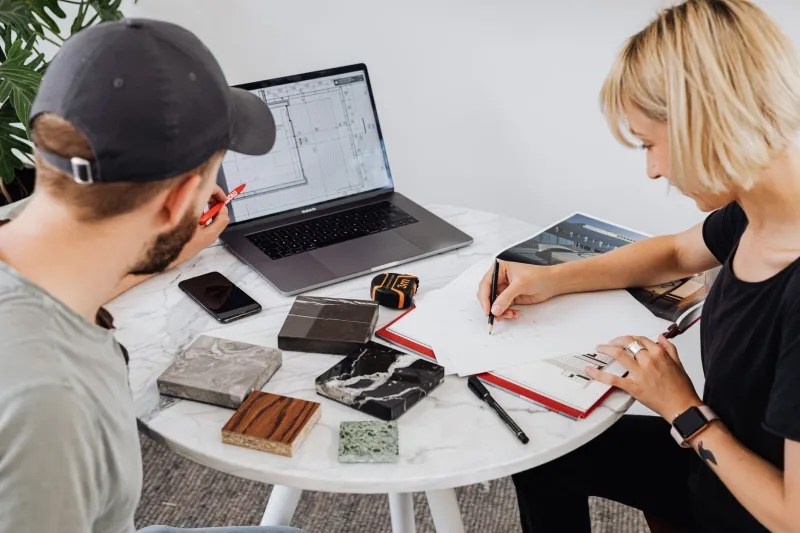
In practical terms, this might mean reaching out to someone in an adjacent field rather than your own. A designer collaborating with a journalist. A filmmaker working with a poet. A brand strategist partnering with an anthropologist. The overlap is strange enough to create friction, but close enough that communication is still possible.
Start small. A single project. A contained experiment. See what the friction produces before you commit to a long arc together.
The Work That Comes Out the Other Side
I'll be honest — this kind of collaboration is not always comfortable. There are sessions where you leave feeling more confused than when you walked in. There are moments where you genuinely wonder if the whole thing is a mistake.
But the work that comes out the other side tends to have something that's hard to manufacture any other way: texture. Tension that's baked into the thing itself. A perspective that isn't just one person's voice slightly louder.
Audiences feel that, even when they can't name it. There's a difference between work that was agreed upon and work that was earned — and people respond to that difference in ways that matter.
Your creative soulmate might be the person who challenges everything you think you know about what you're making. The best version of your work might be waiting on the other side of a collaboration that makes you uncomfortable.
That's a weird thing to look forward to. But here we are.