The Quiet Room: How Cutting Off the Feedback Faucet Finally Unlocked My Best Creative Work
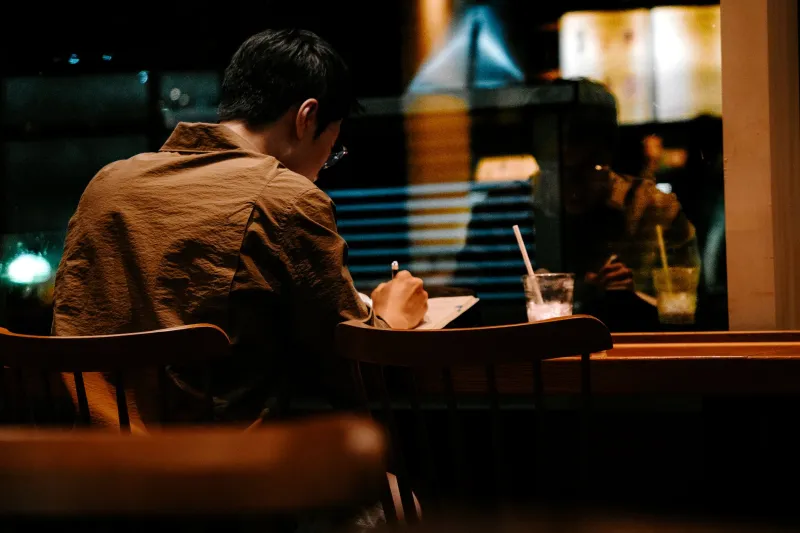
The Noise We Mistake for Guidance
Here's something nobody really wants to admit: we're addicted to feedback. Not because we're insecure — though that's part of it — but because feedback feels productive. Someone comments on your draft, your inbox fills up with opinions, your group chat buzzes with takes, and suddenly it seems like you're moving. Like things are happening. Like you're getting somewhere.
Except you're not. Not really.
What you're actually doing is outsourcing your instincts. Every time you run a half-formed idea past someone before it's fully cooked, you're inviting their voice into a room that probably needs to stay quiet a little longer. And the problem isn't that other people's perspectives are worthless — they're not. The problem is timing. Input that arrives too early doesn't sharpen your work. It redirects it. Sometimes into something better, sure. But often into something blander, safer, and less distinctly yours.
What Happens to Your Brain in the Silence
There's actual psychology behind this. When you're constantly receiving external input — even positive input — your brain starts calibrating toward that feedback rather than toward your own internal compass. Researchers call it a form of cognitive offloading. You stop trusting your gut because you've trained yourself to wait for confirmation from outside sources.
The result? You start making work that's optimized for other people's approval rather than for your own authentic vision. And the scary part is you usually don't notice it happening. The drift is gradual. One softened edge here, one crowd-pleasing pivot there, and eventually the thing you're making looks nothing like what you originally felt compelled to create.
Silence — real, deliberate, uncomfortable silence — forces that process to reverse. When there's no one to check in with, no comment section to monitor, no friend group waiting for an update, your brain has no choice but to go inward. And that's where the good stuff lives.
The Difference Between Isolation and Avoidance
Before we go further, let's be clear about something. There's a version of creative silence that's actually just fear wearing a disguise. Locking your work in a drawer because you're terrified of judgment? That's not strategy — that's avoidance. And it produces nothing except a growing pile of unfinished projects and a lot of middle-of-the-night anxiety.
The kind of silence I'm talking about is intentional. It's the decision to go heads-down on a project for a specific period of time — a week, a month, a full creative season — without seeking outside input. Not because you're hiding, but because you're protecting something fragile that needs space to become itself before the world gets a vote.
Think about it like bread dough. You don't keep poking at it every five minutes to check if it's risen. You put it somewhere warm, cover it up, and leave it alone. The process requires the absence of interference. Creative work is often the same way.
The Feedback Loop That's Actually Slowing You Down
Here's the loop most of us are stuck in: you create something, you share it immediately, you get feedback, you adjust, you share again, you get more feedback, you adjust again. On and on. It feels iterative and smart. It looks like growth.
But what it's actually doing is keeping you in a permanent state of reaction. You never get far enough into your own vision to discover what it actually wants to become — because before it can develop, someone else has already nudged it in a different direction.
The most interesting creative work I've done — and the work I've seen other people do that genuinely stops you in your tracks — almost always came out of a period where the creator went somewhere quiet and stayed there. They weren't checking for approval. They weren't workshopping ideas in real time. They were just making, trusting themselves, and sitting with the discomfort of not knowing if it was good yet.
That discomfort, by the way, is not a problem. It's the whole point.
Building Your Own Quiet Room
So what does this actually look like in practice? Because "go be quiet" is advice that's easier to give than to follow, especially when your whole creative life is built around platforms that reward constant sharing.
A few things that have actually worked:
Set a no-share window. Before you start a project, decide how long it stays private. Not forever — just long enough for it to develop a spine. For some projects that's two weeks. For others it's three months. The timeline matters less than the commitment.
Kill the running commentary. The group chat updates, the Instagram Stories showing your process, the Discord check-ins — all of it creates an audience before your work is ready for one. An audience changes what you make, even when you think it doesn't.
Sit with the discomfort of not knowing. This is the hard one. When you're used to getting real-time feedback, the silence feels like failure. It feels like you're doing something wrong. You're not. You're just finally doing it without a safety net, which is exactly when the most honest work tends to emerge.
Reserve feedback for specific, strategic moments. Feedback isn't the enemy — premature feedback is. Build in checkpoints where outside input actually serves the work, rather than letting it flow in constantly and unchecked.
What You Find When the Noise Stops
When you finally cut the feedback faucet — really cut it, not just turn it down a little — something kind of uncomfortable happens at first. You realize how much of your creative decision-making had been quietly outsourced. How many choices you'd been making based on what you thought people wanted rather than what you actually believed.
And then, if you stay in that quiet long enough, something else happens. You start to hear yourself again. The real version, not the one performing for an audience or calibrating for approval. The one that has actual opinions and genuine instincts and a specific point of view that nobody else has.
That version of you makes better work. Weirder work, sometimes. Less immediately palatable work, maybe. But more alive work. The kind that actually lands with people who are paying real attention — not because it was optimized for them, but because it was honest in a way that optimization can never replicate.
The feedback loop nobody talks about isn't the one between you and your audience. It's the one between you and yourself. And it only opens up when everything else goes quiet.